Jenny Morris will never forget opening the mailbox one December and finding a royalty payment from APRA for her songwriting. It was earlyish in the career of the New Zealand-born singer-songwriter, who would go on to become an acclaimed performer and writer, but the impact of that acknowledgement has never left her.
“Getting that cheque in the mail was … a lifesaver. It came at a time when I was playing gigs and getting paid for that, but the royalty money was nothing to do with how big or tiny a star you were, it was about the songs you’d written,” Jenny says today. “That was great for the bank balance but also for your creative soul, to know there was value there.”
Fast forward a few decades, and Jenny is now chair of APRA, the Australasian Performing Right Association Limited – the very organisation that licensed her , Everywhere I Go, and sent her that early royalty cheque (and continues to today given the song’s enduring appeal).
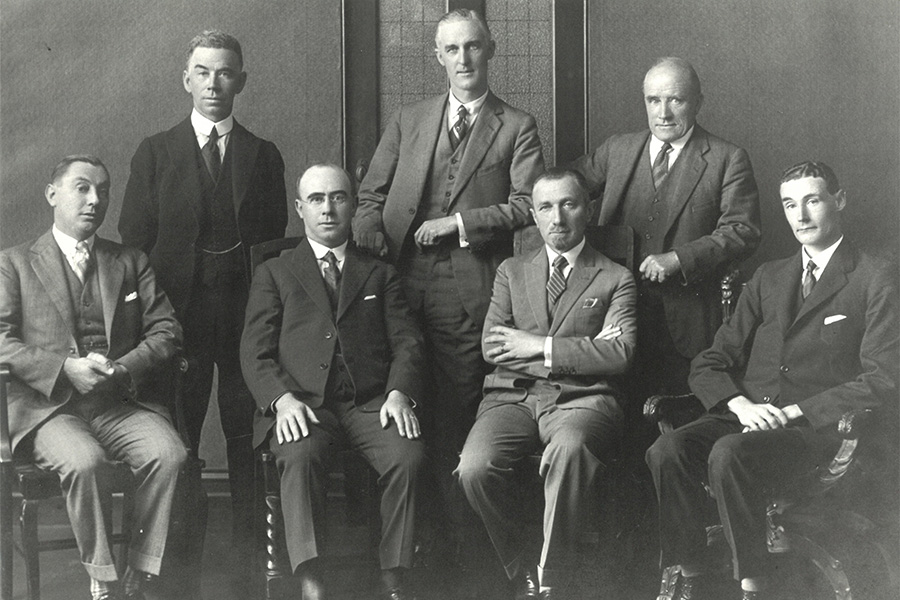
First APRA Board of Directors, Back L-R: George Sutherland, Cecil Darling, Walter Bassett. Front L-R: Ernest Lashmar, Reginald Nathan, Frank Albert and Sidney Edwards. (Image: John Hearder/APRA AMCOS).
A not-for-profit, member-owned organisation, APRA licenses organisations to play, perform, copy, record or make available members’ music, then collects and distributes royalties for those songwriter, composer and publisher members. Now celebrating its centenary, APRA today has plenty more strings to its bow.
One of the first collecting societies in the world, APRA was founded in Sydney in 1926 by six music publishers, determined to ensure songwriters, composers and publishers were paid whenever their music was performed.
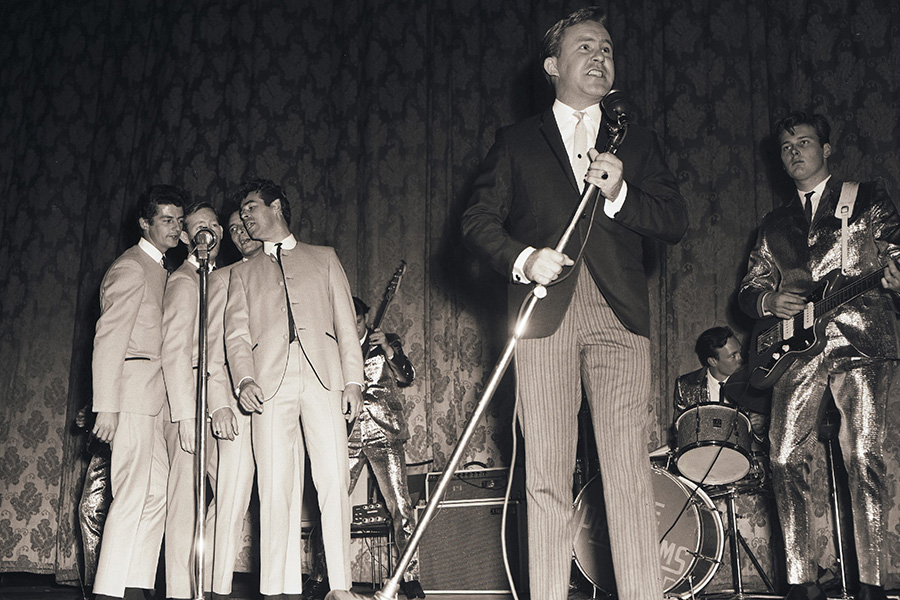
APRA has backed artists including Johnny O’Keefe (second from right). (Image: Australian Performing Arts Collection, Arts Centre Melbourne).
The group included Allans, Chappell & Co, EW Cole, Nicholsons, Palings, and Alberts (then run by managing director Frank Albert).
Within that first year, they had secured licences from venues including hotels, music halls and, the big one: radio. By 1927, New Zealand had joined the partnership with APRA; while writers and composers joined as members by 1930, all receiving royalties direct by the 1940s for works performed both locally and internationally (APRA signed a reciprocal agreement with its American counterpart, ASCAP, in 1948).
Today’s board has expanded to include six writers who sit alongside six music publishers, with the chair mandated to be a songwriter voted on by the board.
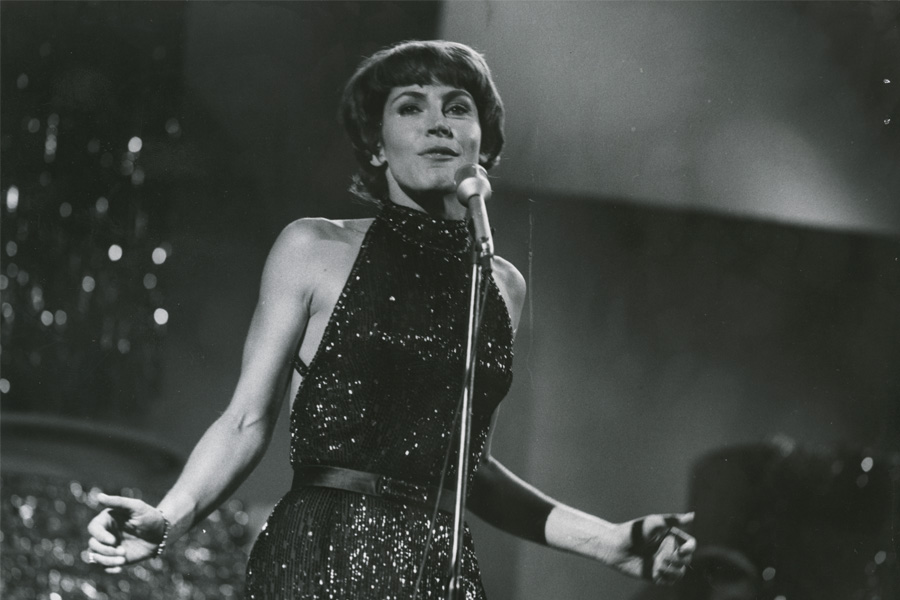
Helen Reddy (Image: From the collection of The National Film and Sound Archive).
During the past 100 years, APRA has continually evolved to best represent the changing times, trends and technology, from financially supporting members during the Depression in the 1930s, to supporting them on the world stage in the 1950s-60s when the likes of Johnny O’Keefe, The Seekers, Helen Reddy, Olivia Newton-John and The Easybeats took Australian rock and pop music to the world; and supplying the first TV licensing agreement the year after television launched in 1956. APRA also signed reciprocal agreements with 31 international rights organisations in 1969, and in 1979, AMCOS (Australasian Mechanical Copyright Owners Society) was established to administer mechanical royalties for records, tapes and emerging formats, partnering with APRA in 1997 under the banner ‘APRA AMCOS’.
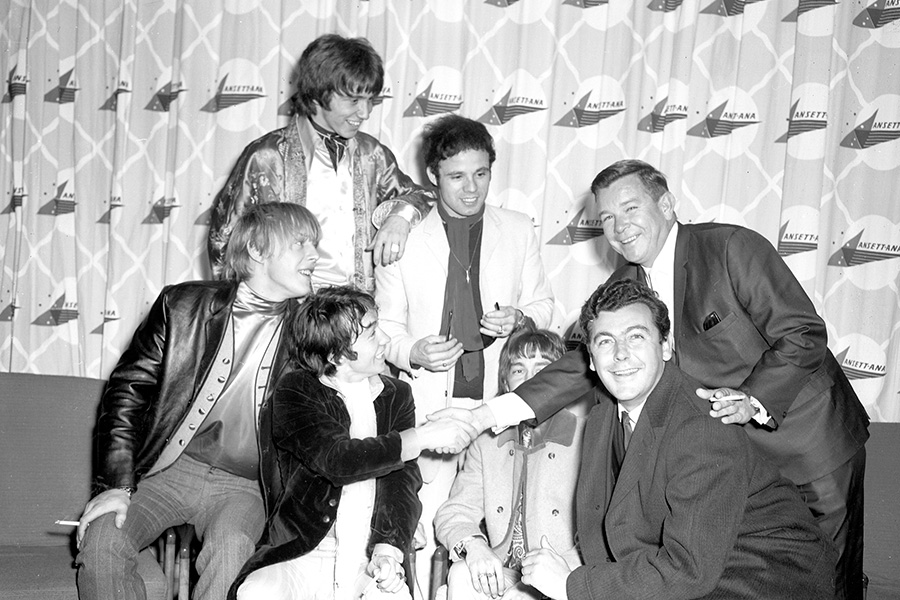
Members of The Easybeats (Image: Australian Performing Arts Collection, Arts Centre Melbourne).
In addition to signalling a diversified Australian sound – think Silverchair’s ‘Frogstomp’ and Yothu Yindi’s ‘Treaty’ (APRA’s 1991 Song of the Year) – the ‘90s were also the decade when significant challenges emerged for the music industry with the collapse of physical sales, the rise of piracy and the emergence of digital licensing. Before long APRA had reimagined licensing for a world where music was data, not product. In 2003, the first online music service licences were put in place and in 2008 the first licence agreement was signed with YouTube in Australia and New Zealand.
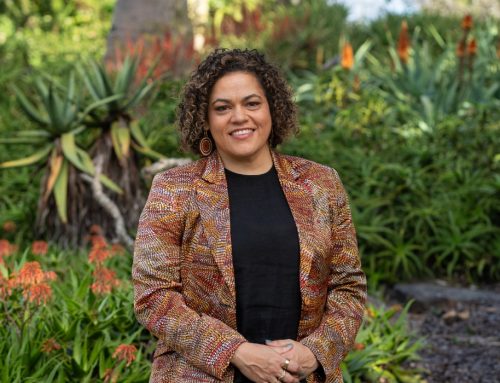
Today, APRA AMCOS represents over 128,000 music creators and employs around 400 employees in Australia and New Zealand. In addition to pivoting to embrace the digital age, Jenny is particularly proud of APRA’s support of First Nations writers through its dedicated National Aboriginal and Torres Strait Islander Music Office (NATSIMO), run by singer-songwriter and Alyawarre woman, Leah Flanagan, in Darwin.
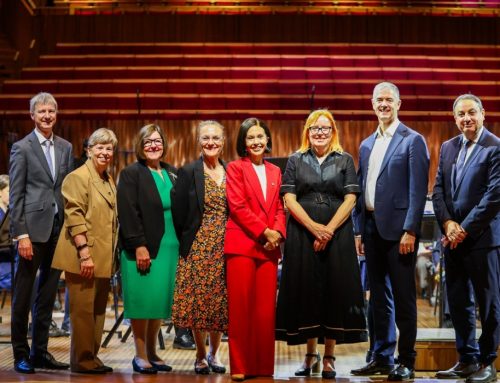
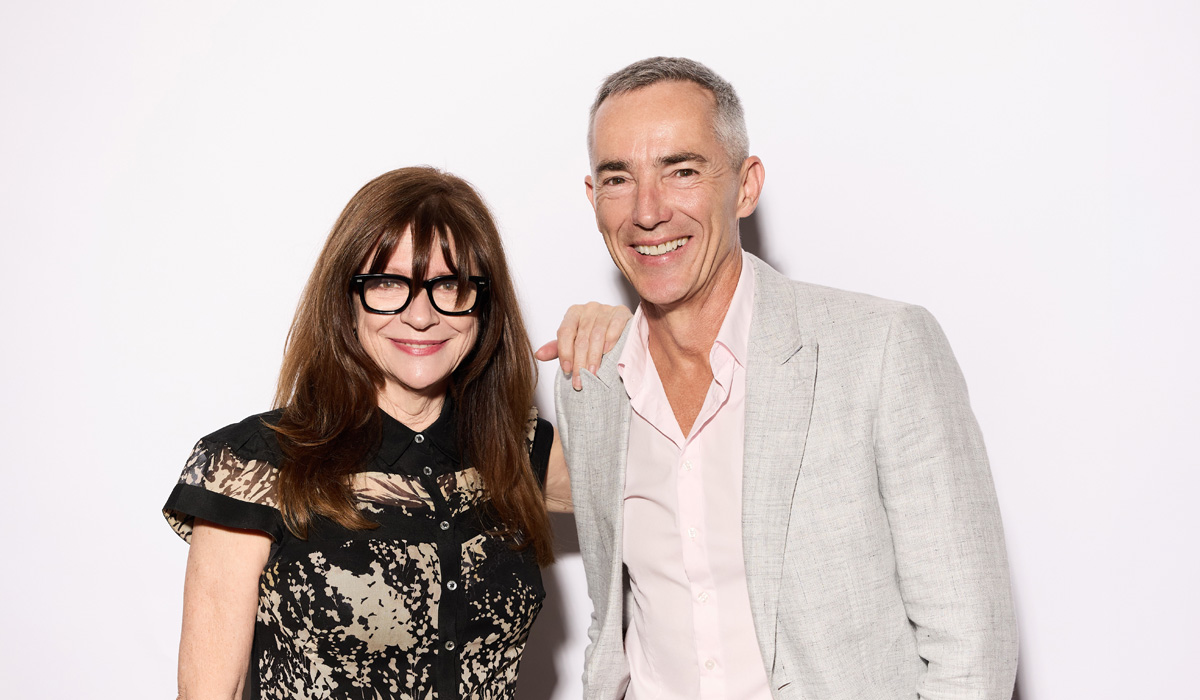
Alongside the digital challenges and ongoing copyright threat AI poses is APRA’s increasingly important role as lobbyists for its members. Jenny and CEO Dean Ormston (pictured together in main image) maintain an important relationship with the federal government, continually proving to them the value of copyright given the economic impact the music industry makes on Australia’s GDP.
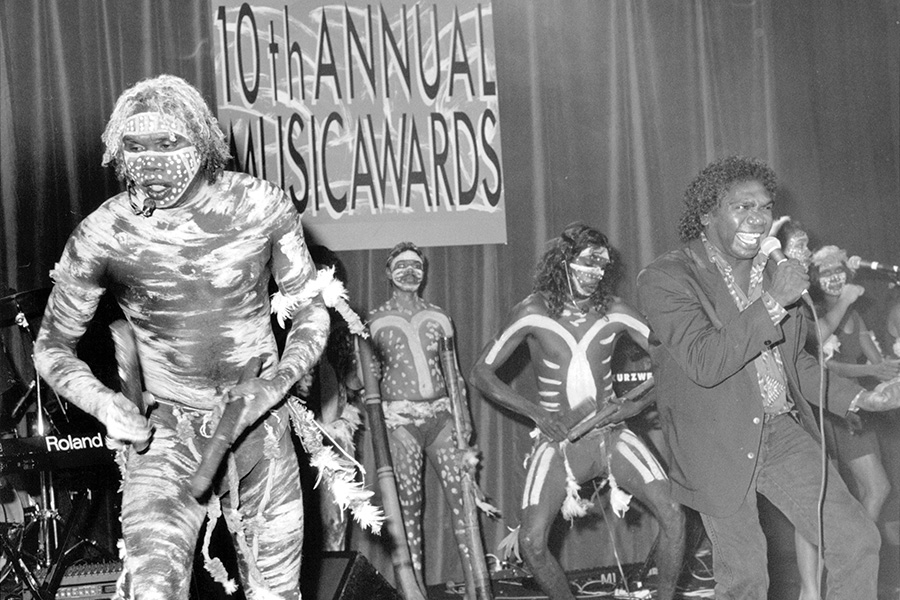
Yothu Yindi perform ‘Treaty’ at the 1991 APRA Music Awards (Image: APRA AMCOS).
“The more we can make people understand the value of copyright, the more support there is,” says Jenny. “The music industry generates $16bn per annum, that’s not small fry and we’ve finally got traction on that, people are understanding [musicians] support the economy, not just culture.”
To celebrate its centenary, has organised multiple events including the gala APRA Music Awards on April 29, held for the first time at Sydney’s Hordern Pavilion, where this year’s (very exciting) recipient of the Ted Albert Award for Outstanding Services to Australian Music will be announced. New Zealand is similarly planning a prestige event for its annual Silver Scroll; while the inaugural Songwriter Hall of Fame will be launched at the National Film and Sound Archives in Canberra later this year.
Alberts is proud to have had four generations of family members involved in APRA, from co-founder Frank, to former APRA chair and longtime board member Alexis and his son Ted, widely considered the father of Australian rock’n’roll; and the current generation’s David Albert. Now Alberts CEO, David was for six years a director of APRA AMCOS alongside Jenny, who describes him as “a humanist but also very cognoscente of business, someone I could always rely on for a wise word.”

Joel Little and Lorde at the 2013 Silver Scroll Awards (Image: James Ensing Trussell).
Jenny’s 100th birthday wish is that Australians truly valued the profound effect music has in our lives, the role it plays not only in contributing to a flourishing culture but a healthier economy.
“If you’re in Europe you’re preaching to the converted when you say ‘culture is worth something’,” she says. “That’s what we’re missing here, and why messaging is so important. We are finally beginning to get traction on that, people are understanding that music supports the economy, not just culture.”
(Feature image of Jenny Morris and Dean Ormston: Daniel Boud/APRA AMCOS).