As March marks B Corp Month – a global celebration of businesses meeting high standards of social and environmental impact – we’re reflecting on what that commitment looks like in practice at Alberts.
Guided by our purpose to create a vibrant and sustainable future, we became a certified B Corp in 2021 and last year passed our required three-yearly recertification – a process that assesses performance across governance, workers, community, environment and customers, examining how a business operates, not just what it produces. Our score increased from 82 to 113, reflecting the steady work of our team and the considered processes that help embed positive impact across the business.
Will, if you had to explain your role to a friend at a BBQ, how would you describe it?
I help the team make better investment decisions and keep the Alberts Impact Ventures (AIV) and The Tony Foundation corpus’ portfolios running smoothly. That means doing research and due diligence on funds and opportunities, tracking performance and risk, preparing Investment Committee papers, and making sure we’re on top of cashflows, valuations and reporting.
A big part of my role is turning a lot of information into clear, decision-useful insights. In practice, I sit between portfolio companies/fund managers and our internal decision-makers, helping translate strategy into execution and disciplined follow-through.
What’s one thing you’ve learned since joining Alberts that you didn’t expect to be part of a finance role?
How much relationship management and judgement sits alongside the numbers. The technical work matters, but outcomes often come from asking the right questions early, setting expectations clearly, and maintaining a consistent cadence with managers and portfolio companies.
I didn’t fully appreciate how much “good investing” is process design: getting the right information, stress-testing assumptions, documenting decisions, and then monitoring without overreacting to noise. It’s a finance role, but it’s also communication, prioritisation, and governance in motion.
With B Corp’s focus on people, equity and the environment, how does Alberts’ B Corp commitment shape the investment portfolios of AIV and The Tony Foundation corpus?
B Corp commitments push us to evaluate investments through both a return lens and a stakeholder lens, and to be explicit about trade-offs. For AIV and The Tony Foundation, that shows up in how we screen opportunities, the diligence questions we prioritise, and what we monitor post-investment (governance, workforce practices, community impact and environmental footprint).
It also influences portfolio construction: backing businesses that create measurable social value (e.g. Ngutu College, Thrive Refugee Enterprise, and Specialist Disability Accommodation initiatives within The Tony Foundation corpus), while also supporting equality and environmental themes where appropriate (e.g. Hatch for access/equity, Uluu for materials and sustainability outcomes).
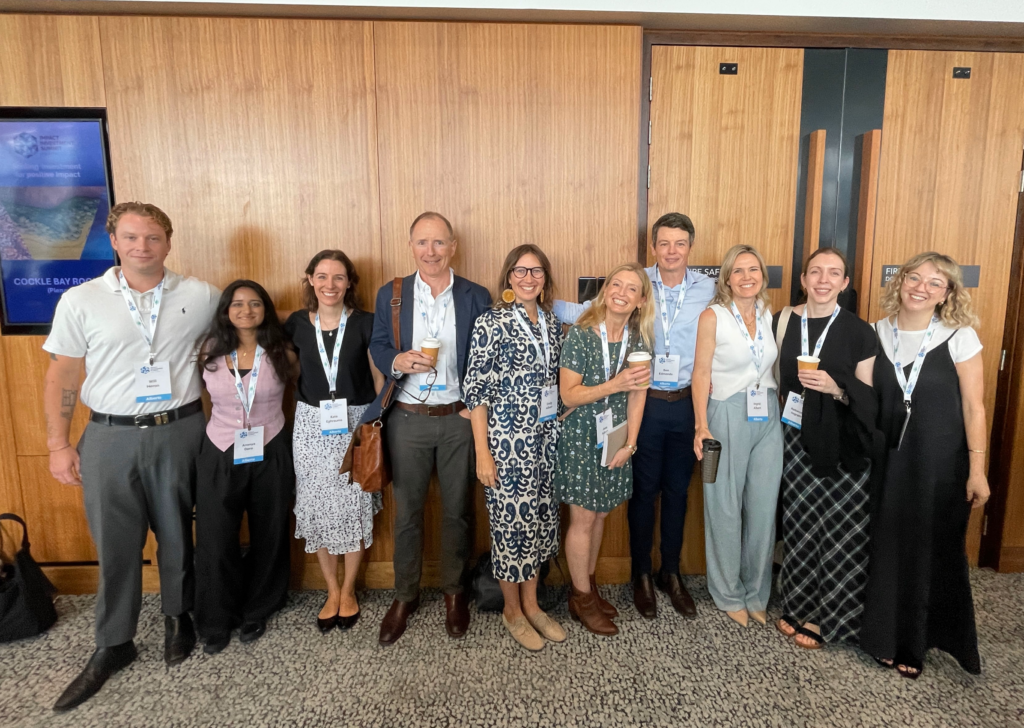
Portfolio Analyst, Will Heron (far left), with members of the Alberts team at the 2025 Impact Investment Summit Asia Pacific.
How do you see B Corp principles influencing the way Alberts supports its portfolio companies?
It creates a clearer “how we do things” standard, not just a “what we invest in” statement. In portfolio support, that typically means setting expectations on governance and transparency, encouraging good reporting discipline, and engaging on practical initiatives that strengthen operations (e.g. policies, risk management, people practices, and supplier/partner choices).
It also helps align incentives: we’re more likely to support management teams who take accountability seriously and can evidence progress. Over time, it makes conversations with founders and managers more consistent, because the B Corp principles become part of our shared operating rhythm.
What’s something small that actually makes a big difference when it comes to responsible investing?
Writing down the decision rules and using them every time. A simple Responsible Investment Framework (RIF) checklist in the investment memo forces consistency: what risks we looked for, what mitigants exist, and what we’ll monitor after we invest. It sounds basic, but it prevents “narrative drift” where a great story overrides the fundamentals. It also improves accountability, because you can track whether the thesis and risk flags changed over time. Small process, big impact equals better decisions, clearer audit trail, and more disciplined portfolio monitoring.
If someone wants to bring more B Corp thinking into their own work, what’s a simple first step?
Add one extra question to your normal workflow: “Who is impacted by this decision, and what’s the likely second-order effect?” Then write the answer down. Whether you’re reviewing an investment, choosing a supplier, or designing a process, that single prompt shifts you from short-term optimisation to stakeholder-aware judgement.
In an investment context, it naturally leads to better diligence questions on governance, workforce, community and environmental risks, and it clarifies what you’ll measure post-decision. The key is consistency: one simple step, repeated, becomes culture.
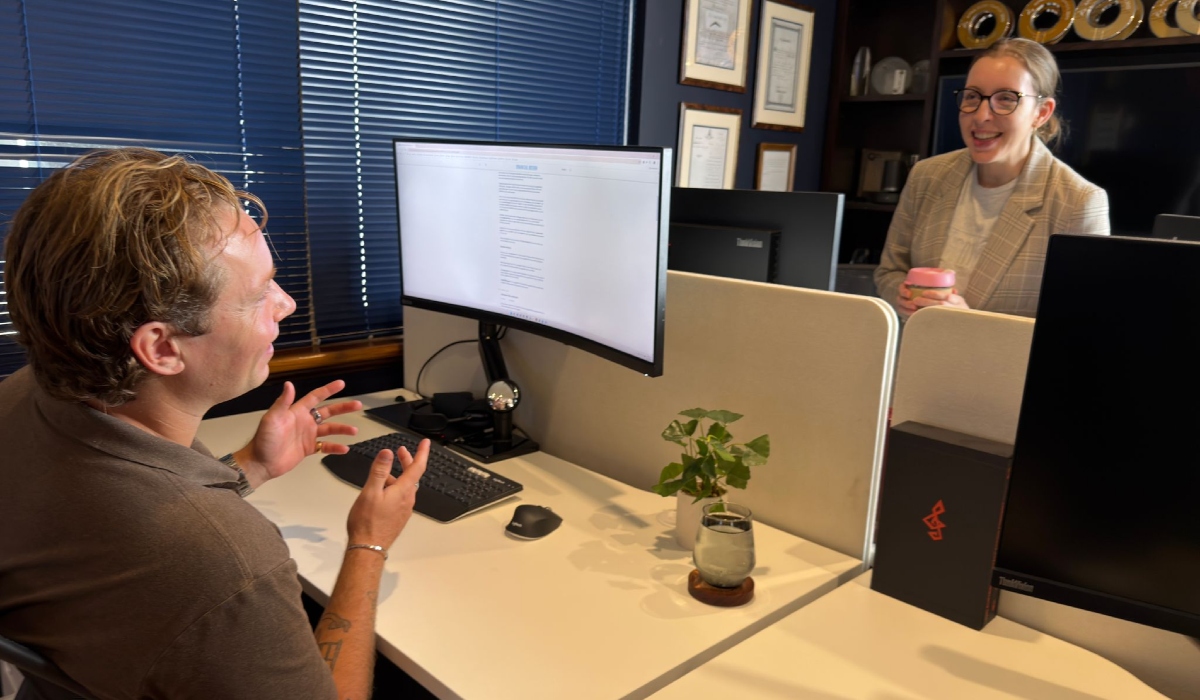
(Feature image: Will with Alberts Finance Manager, Rebecca Ingram).