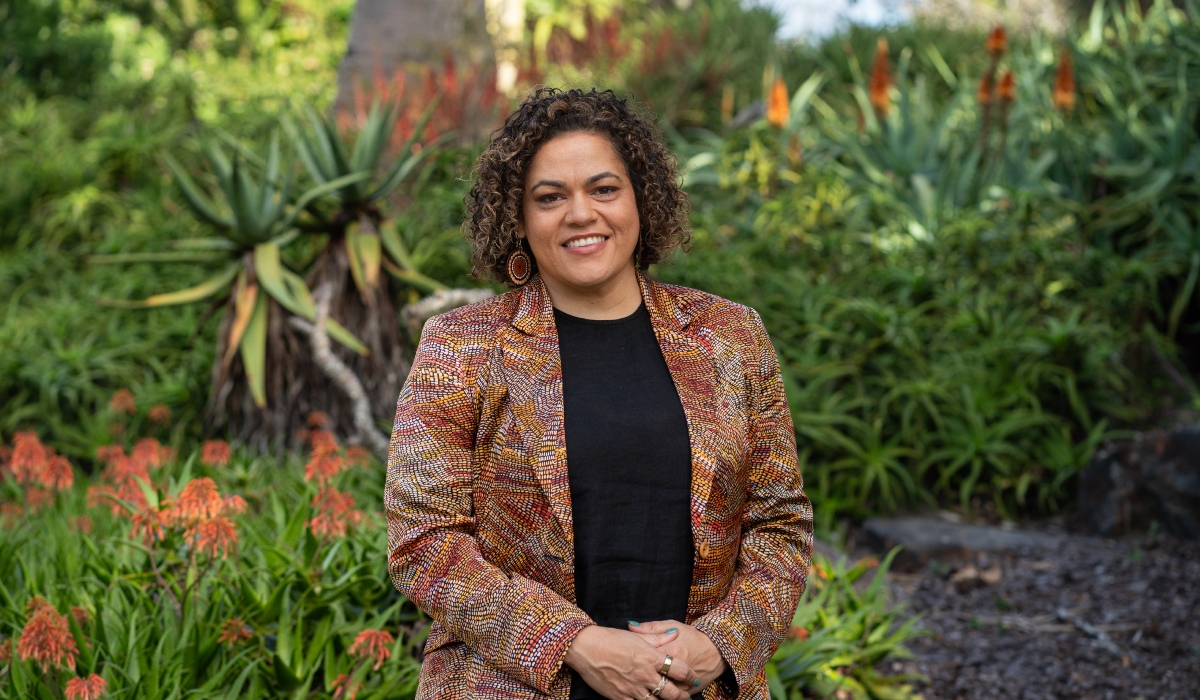
From a teenager typing letters for her Aunties to improve Indigenous health access, Larissa Baldwin-Roberts is now leading a national movement for climate solutions, Treaty and First Nations justice. As we celebrate this year’s NAIDOC theme, 50 Years of Deadly, Larissa reflects on building momentum using 65,000 years of knowledge.
When Larissa Baldwin-Roberts was a teenager growing up in northern NSW, she was regularly called upon to help her aunties as they campaigned for a better health system for local Aboriginal and Torres Strait Islander people.
“We’d go into Aboriginal communities and talk about the health system and what wasn’t working. I was 16 and because my aunties weren’t literate and I could use a laptop I got dragged along and would type up notes, then send them to politicians,” says Larissa, a proud Widjabul Wia-bul woman from the Bundjalung Nations. “I learnt so much around understanding why healthcare wasn’t getting to our community, at a very young age.”
Over the years, Larissa would expand her knowledge and advocacy to campaigns for land rights, climate solutions, First Nations justice and cultural heritage. From the Northern Territory, where she began to hone her specialisation on the gas industry and its impact on climate change; to Australia’s first Indigenous youth climate network Seed, which she co-founded in 2015; and on to progressive advocacy group GetUp!, where she was appointed CEO in 2022.
Recognising the need for a dedicated organisation for Indigenous advocacy in climate, justice and community self-determination, Larissa co-founded First Nations advocacy organisation Common Threads in 2022, ultimately leaving GetUp to become Common Thread’s CEO in 2025 – a role she juggles today as co-chair of the Indigenous People Caucus for the next two United Nations Climate Change Conferences, COP31 and COP32.
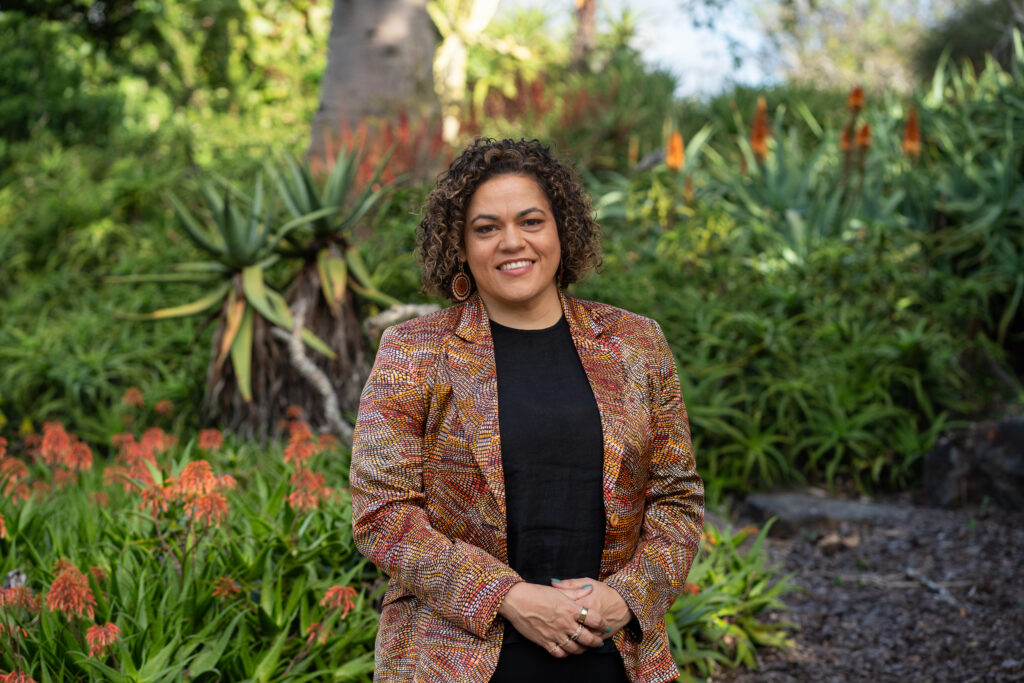
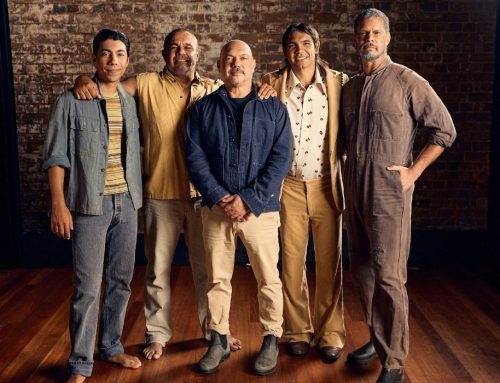
Larissa Baldwin-Roberts, CEO of Common Threads and a proud Widjabul Wia-bul woman, is helping build the next generation of First Nations leaders through community-led action.
“I learnt so much at GetUp, it’s an incredible resource in terms of working there and meeting all these people who were professional campaigners, it really opened my eyes to what was more broadly the advocacy sector; thinking about political campaigning which I really enjoyed,” Larissa says from London, where she has been attending London Climate Action Week.
Nevertheless, strategies typically needed adapting in the context of working with First Nations communities, which Larissa did with the support of GetUp’s Indigenous councillors. Common Threads evolved informally as a collective of Aboriginal and Torres Strait Islander campaigners working in non-government organisations who were looking for a collective networking space to work together on adapting campaigns.
“It was a collaboration over many years, of ‘how do we develop our messaging, research projects, communications projects’ and it turned into a lot of work around capacity building of young people, trying to bring them into the movement.”
It was after the defeat of The Voice referendum in 2023 and what Larissa describes as ‘the mobilisation of the anti-Indigenous rights movement’ that momentum began to build around a formalised, stand-alone organisation, Common Threads, which officially launched in 2025.
“There was a really big pull to just wanting to come back and focus on working with our community, in a space that was independent.”
Alongside Larissa, the organisation was co-founded by Dr Jackie Huggins AO (Bidjara/Birri Gubba Juru) and Amelia Telford (Bundjalung and South Sea Islander). Today the non-profit organisation has a staff of around 15 alongside a huge number of advocates aligned to the various national campaigns it runs for truth, Treaties, land rights and climate justice.
“We have about 15,000 [allies] on our Together for Treaty campaign for example, alongside an alliance of about 100 NGOs and partners helping expand that campaign,” says Larissa of the movement to create momentum for truth-telling and Treaties.
The organisation is funded by in-kind support, donors and grants. In 2024 and 2025, Common Threads received grants from Groundswell Giving, a national organisation that connects people with climate-focussed solutions to those with resources, raising and distributing funds to strategic high-impact climate action organisations around Australia.
In 2024, acknowledging the growing, catastrophic risk climate change poses to our planet and society, Alberts through The Tony Foundation joined Groundswell’s Major Giving Circle, an initiative calling for 20 members to donate to build a critical mass of $1 million to create high-impact climate interventions.
Through its Groundswell grants, Common Threads will amplify its First Nations solutions to climate mitigation, climate adaptation and biodiversity protection, striving for national policy change by building capacity of its community leaders, including Traditional Owners not traditionally seen as ‘climate leaders’. It is also planning a First Nations fellowship for young and emerging leaders.
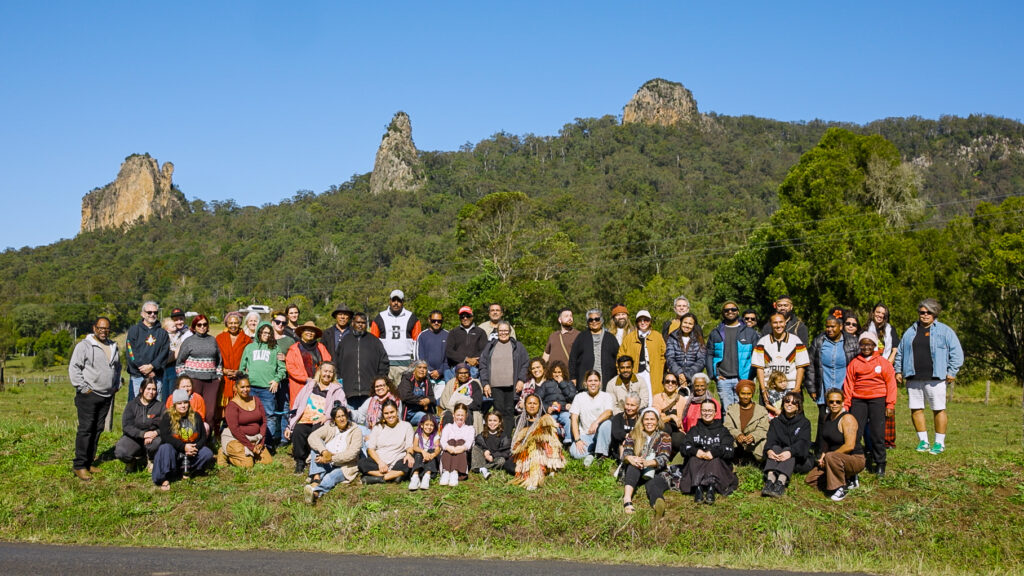
Advocates at the Common Threads National Summit and Lismore First Nations Climate Dialogue, 2025.
Larissa emphasises an organisation like Common Threads would not exist were it not for the knowledge passed down by generations of Elders who continue to mentor and guide them.
As we head into NAIDOC Week – an annual national celebration of the histories, cultures and achievements of Aboriginal and Torres Strait Islander peoples – and the 2026 milestone theme ’50 Years of Deadly’, Larissa acknowledges the powerful and profound groundwork laid by her Elders in bringing Indigenous rights to Australia’s and the world’s attention.
As Alberts continues implementing its first Reflect Reconciliation Action Plan, we are committed to creating space for First Nations voices and celebrating leaders like Larissa, whose work demonstrates the power of self-determination and community leadership.
“Aunty Jackie has always been an incredible person within my life, but there’s also been so many Elders back home in my own community, aunties and uncles I’ve looked up to who didn’t finish high school but still [built] our health centres.
“Common Threads aims to build intergenerational movement. That is so important because that is the cornerstone of how change happens within our community, but it’s also a cultural obligation as well, how do we bring new energy and technology and ability to persuade an understanding that a lot of decision making still sits with the seniority in our community.”
And with Common Threads, Larissa is only too aware the organisation is building on a long-held tradition of advocating for what is right.
“[People only need] look back to our history around the Aboriginal community and the important role advocacy plays,” Larissa says. “Yes, there’s a role for protests and rallies and vigils, but also, importantly, it’s the work community leaders do – gathering people together and really thinking about what it means to hold community aspirations over generations, and think about how our community has fought, together.”