Alberts is proud to be launching its inaugural Reconciliation Action Plan (RAP) in acknowledgement of our ongoing commitment to championing diversity, equity and inclusion and to advancing reconciliation with Aboriginal and Torres Strait Islander peoples.
Our 2026 ‘Reflect’ RAP provides a framework for continued action, accountability, education, and positive social impact and builds on our determination to deepen our understanding of First Nations peoples’ culture and wisdom.
“The development of our RAP furthers our family business’s ongoing desire to partner with, learn from and support Aboriginal and Torres Strait Islander peoples,” says Alberts CEO, David Albert. “It reflects our belief that to move forward as a country, we need to recognise, celebrate and give voice to Australia’s rich First Nations history and wisdom.”
Alberts is now one of more than 3,000 corporate, government, and not-for-profit organisations that have formally committed to reconciliation through Reconciliation Australia’s RAP program.
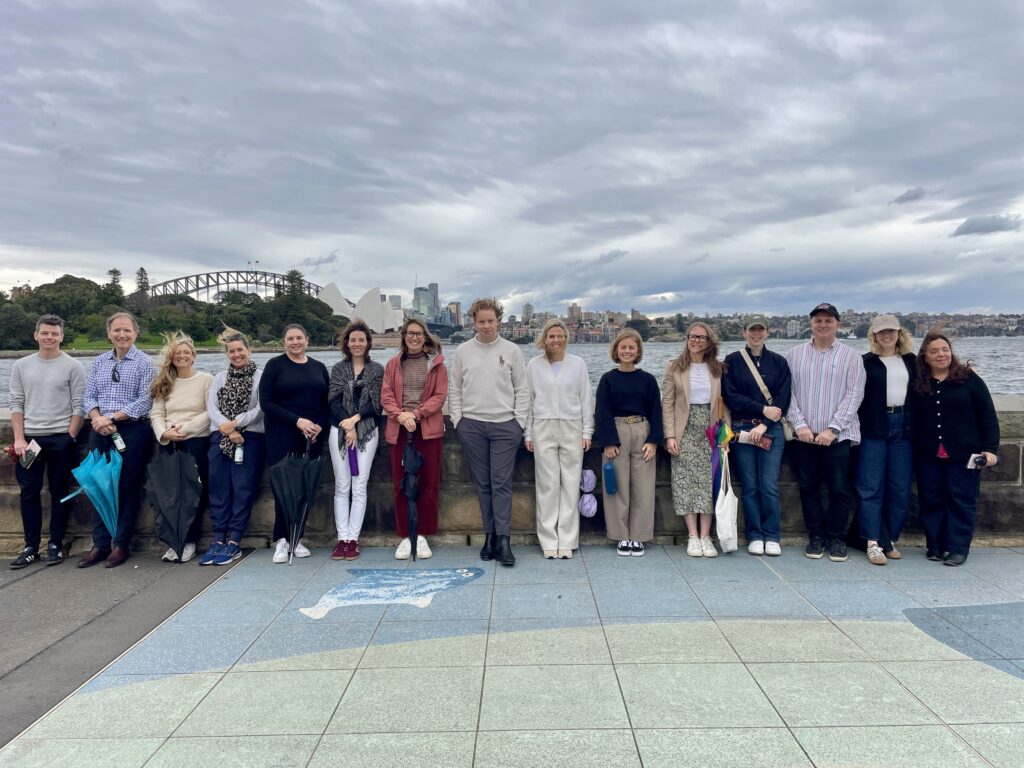
Our team during an Aboriginal Harbour Heritage Tour of the Royal Botanic Gardens in August 2025, learning about the history and culture of the Gadigal people, the Traditional Custodians of the lands on which we work and the surrounding waters.
“This Reflect RAP enables Alberts to deepen its understanding of its sphere of influence and the unique contribution it can make to lead progress across the five dimensions of reconciliation: race relations; equality and equity; institutional integrity; unity; and historical acceptance,” says Karen Mundine, CEO of Reconciliation Australia.
The RAP helps us strengthen partnerships nurtured since 2012 through our philanthropic arm, The Tony Foundation, that seeks to enable positive outcomes for young Australians through music, including a particular focus on Aboriginal and Torres Strait Islander young people.
Alberts first started thinking about developing a more formal First Nations strategy in late 2023. Under the generous guidance and wisdom of Distinguished Professor Larissa Behrendt AO, Professor Lindon Coombes, and Josh Gilbert from the University of Technology’s Jumbunna Institute for Indigenous Education and Research, Alberts has outlined a strategic path for the business to take meaningful action towards reconciliation.
Early commitments included establishing a RAP Working Group who meet regularly, with Josh Gilbert providing cultural guidance, insights and support. “I have truly appreciated the steadiness and interest Alberts’ has shown in the development of its first RAP,” says Josh, a Worimi man and the Indigenous Co-Chair of Reconciliation NSW. “The organisation has done an incredible amount of work with First Nations people already and is using this solid foundation to build future efforts.”
Broader team engagement at Alberts has focussed on expanding knowledge and capacity among staff through various and ongoing activities, workshops and education sessions. These included a foundational learning session led by Professor Coombes that aimed to establish baseline knowledge around First Nations perspectives, experiences and the ongoing historical and systemic impact of colonisation.
Additionally, staff have taken part in a local Aboriginal Harbour Heritage tour of the Botanic Gardens of Sydney; participated in Children’s Ground’s ‘Wear it Yellow’ fundraiser during National Reconciliation Week; been encouraged to include an Acknowledgement of Country at suitable gatherings, supported by guidance on their meaning and appropriate delivery; while regular feature articles on our website and social media give voice to and amplify the work of our First Nations grant partners of The Tony Foundation, including raising awareness of significant dates and milestones.

Rhythms of Country “honours the relationships between Aboriginal people and Country, as well as each other,” says its creator, Kirsten Gray. ” It pays particular respect to the Eora Nation and those who lived on Warrane, and acknowledges the deep significance of water to the lives of Aboriginal people.”
We are particularly thrilled to have collaborated on our RAP with Muruwari and Yuwaalaraay woman Kirsten Gray – an academic and artist whose family hails from Angledool, NSW – who created the bespoke artwork Rhythms of Country, bringing our document to life.
Through imagery of waterways, ceremony and gatherings, Kirsten’s artwork references Alberts’ office location on Gadigal Country, near Warrane (Sydney Cove), honouring the enduring relationships between Aboriginal people, Country and community that have shaped this place.
The steps toward and commitment to Reconciliation Australia’s entry-level ‘Reflect’ RAP support Alberts’ belief that greater diversity powers business success and a fairer society, and that building a more united and equitable Australia requires recognising, celebrating and giving voice to Australia’s rich First Nations heritage.
For Josh Gilbert, the RAP process underscores the importance of understanding Aboriginal and Torres Strait Islander perspectives in today’s workplaces. “Indigenous people, and therefore Indigenous culture and insights, can bring a lot to our organisations,” says Josh. “Diversity in all its forms, particularly noting the intersectionality of Indigenous people, brings so much to how our workplaces run and conduct business.”